

The first season after the acrimonious split with former homegrown all-star winger Mitch Marner nearly proved disastrous for the Toronto Maple Leafs and their fans.
While the Maple Leafs stumbled and bumbled their way to a franchise-worst season-to-season points decrease in a precipitous first-to-last drop in the Atlantic Division standings, they watched Marner dominate the NHL playoffs as the Conn Smythe Trophy frontrunner until the final three games of the Stanley Cup Final.
It was then that the Carolina Hurricanes saved the doom-and-gloom scenario for the Leafs and their followers. They won the last three games of the series over the Vegas Golden Knights to win the Stanley Cup and save further embarrassment for Toronto.
Now, as the NHL offseason heats up, the Maple Leafs may get the last laugh on their jilted ex as the new front office, led by John Chayka, begins to reshape the roster in an attempt to return to relevance.
John Chayka Begins to Maximize Toronto's New Financial Freedom
The Maple Leafs did not take immediate advantage of having Marner off the books during the 2025-26 season. Rather than sign a significant, high-end player, former GM Brad Treliving re-upped John Tavares at a team-friendly number, then opted to sign Dakota Joshua and Mattias Maccelli to help fill the void of Marner's exit. It was unsuccessful.
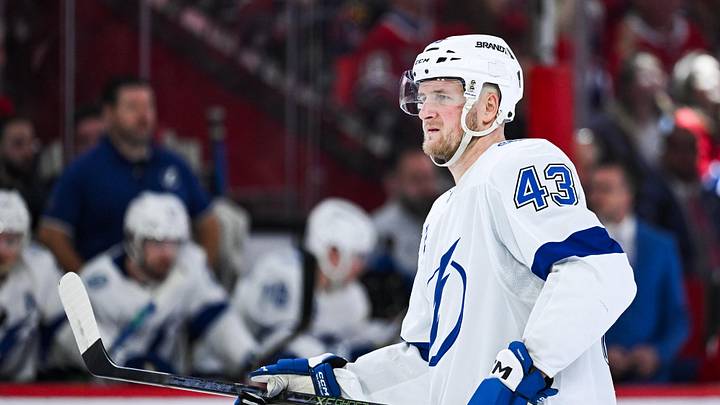
However, the $12 million AAV that Marner signed for in Vegas, a number that likely would have needed to be higher for him to remain in Toronto, is being put to good use by the new Leafs' GM, Chayka. He filled a huge need with the recent acquisition of pending UFA Darren Raddysh in a sign-and-trade with the Tampa Bay Lightning.
Raddysh brings something that the Maple Leafs have never had during the Auston Matthews era, a booming, threatening shot from the point, especially on the power play. Inking the former Lightning defenseman to an eight-year max deal carries risk, but should Toronto receive a productive five years from that deal that averages $8.5 million annually, with a rising NHL salary cap, it would be a steal.
The efficient use of the team's newfound salary cap space from Marner leaving was started by Treliving when he signed Matthew Knies to a six-year extension with a $7.75 million AAV. That deal, without a no-movement clause, has given Chayka and a top-end bargaining chip at the trade table, which reports suggest he is fielding calls to see what others around the league are willing to part with.
Signing Knies to that deal, one of Treliving's best moves during his time in Toronto, puts the Leafs in an advantageous spot. Chayka can peruse the market in hopes of a team packaging an irresistible return or, if no one steps up with an appropriate offer, the Maple Leafs have a stud power forward in place on a good deal for years to come. Either way, the money and cap space were handled magnificently.
There is no doubt that the Leafs felt the sting of Marner's departure in 2025-26, but help is on the horizon. Toronto's great fortune in winning the NHL Draft Lottery has allowed them to select top prospect, Gavin McKenna.
It just so happens that McKenna's greatest attribute is his playmaking and vision, something lost in Toronto when Marner left. The Maple Leafs would be wise to select him with the first pick in the upcoming draft and watch him feed passes to Matthews and Raddysh for years to come.
The cherry on top of Marner leaving for Vegas? The first-round pick that is on its way from the Colorado Avalanche in either 2027 or 2028, after the Leafs traded away Nicolas Roy at the NHL Trade Deadline, who was originally acquired in a sign-and-trade from Vegas for Marner.
The agonizing sting of seeing Marner excel elsewhere in 2025-26 is being cushioned by the Maple Leafs now weaponizing the cap space, reaping the benefits of financial flexibility. Moving forward, it is the Leafs and their fans who should be smiling.
 Add us as a preferred source on Google