

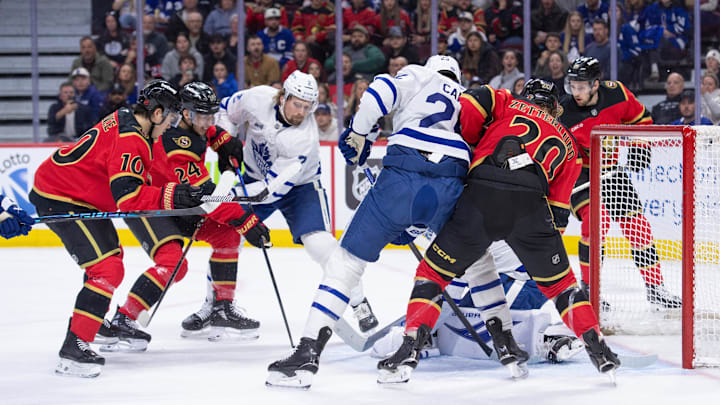
The Toronto Maple Leafs have had a whole lot of problems on the ice this season, but perhaps their biggest issue is finally getting the spotlight.
Over the course of the season, the Maple Leafs have struggled to control play, regularly getting outshot and out-chanced. This isn't a new trend for the Maple Leafs; last season, Toronto relied heavily on its goaltending and often won as it had the second-best save percentage in the NHL. If their goaltending, as we have seen this season, is average, they struggle to win hockey games.
Maple Leafs sorely lack puck possession
That lack of puck control is at the center of the problem. They are spending far more time in their own zone, forcing their goaltenders to face a heavy workload night after night. The Maple Leafs consistently getting heavily outshot will mean they spend far more time in their own zone than their opponents. Looking at their possession time last season, they ranked 29th in the NHL, not an improvement from last season and a huge drop since Sheldon Keefe was behind the bench.
The Maple Leafs, if they want any chance of success over the final 11 games of the regular season, will need to shoot the puck far more often. Too often throughout the season, especially in December and January, while they were slumping, the Leafs were too cute with the puck and would look for the right opportunity instead of hounding rebounds and playing in the dirty areas of the offensive zone. With the Maple Leafs lacking speed and skill throughout the bottom half of their lineup, they set themselves up for failure, which allows their opponents to create most of the chances.
Turnovers and costly giveaways lead to extended zone time
Turnovers and defensive lapses have also come far too frequently. While the Maple Leafs were consistently outshot last season, the quality of their shots and chances was not nearly as high as this season. Their structure throughout the defensive zone has led to these chances and the volume of shots the netminders face. Too often, breakouts are disrupted by turnovers or missed assignments, leading to extended zone time for opponents. When you pair this with only Chris Tanev playing 11 games all season, they are set up for failure.
Miller's SH goal makes it 3-2
— TheLeafsNation (@TLNdc) March 21, 2026
🎥: Sportsnet | NHL pic.twitter.com/kEBsmb31fa
Moving into the final 10 games of the season
Over the course of the next 11 contests, the Maple Leafs can play a more stable structure called the box plus one. A box plus one is when you are set up for a penalty kill with both wingers and defence in their quadrants, while the centre skates around the zone supporting each quadrant. Because this system helps protect the house, the Maple Leafs will face far fewer high-danger chances; however, they may spend about the same time in their zone. The only way their opponents could score would be through missed assignments or defensive lapses, but this will happen far less often if everyone sticks to their quadrant.
The Maple Leafs will have some serious numbers to dive into this offseason, as the shot totals night in and night out are not a stable way to win, as we have seen this season. Last season was a result of pure luck, and now we are beginning to see the flaws in Craig Berube's system.
 Add us as a preferred source on Google